
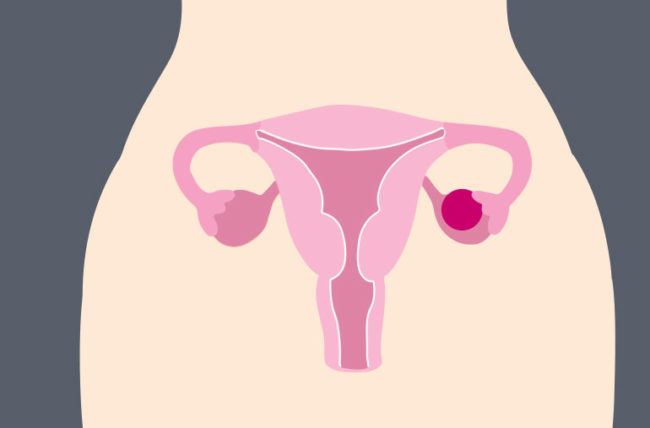
Ovarian cysts usually represent a harmless (benign) condition or a normal process and are mainly seen during a woman's reproductive years.
An ovarian cyst is a sac filled with fluid or semi-solid material that forms on or inside one of the ovaries. The ovaries are small organs that perform very important functions such as producing eggs and producing estrogen - hormones with an extremely important role in fertility and the functioning of the female body. They are located in the lower abdomen (pelvis) next to the fallopian tubes and uterus. Every woman has 2 ovaries, one on each side of the uterus.
Functional cysts, are not related to disease, appear as a result of ovulation (release of an egg from the ovary) and generally shrink over time, usually within 60 days, without specific treatment.
Pathological cysts may include those resulting from polycystic ovary syndrome and ovarian cancer.
What are the symptoms of an ovarian cyst?
Most of the time, smaller cysts don't cause symptoms. In these cases, you may not even know you have a cyst. Larger cysts can cause the following symptoms:
- pelvic pain or a backache
- feeling of heaviness in the abdomen
- period pain
- pain during sex
Some prolonged symptoms may be related to a condition called syndrome polycystic ovariesThis is a condition that causes irregular periods and other hormone-related problems, including obesity and infertility. Other symptoms of polycystic ovary syndrome include increased hair growth and difficulty losing weight.
How is the diagnosis made?
Once pregnancy is first ruled out as the cause of your symptoms, some of the following tests may then be performed:
- intravaginal ultrasound
- blood tests
- hormonal control
- laparoscopy
How is an ovarian cyst treated?
Functional ovarian cysts generally resolve without treatment. In some cases, surgery may be necessary to remove a cyst.
What types of surgeries are used to treat ovarian cysts?
The type of surgery used depends on many different factors such as the size of the cyst, the type of cyst, the patient's age or the presence (or absence) of symptoms and the desire for future childbearing. The surgery is usually performed by Laparoscopy but also by Laparotomy.


 English (UK)
  Ελληνικά