

Pregnancy is one of the most special times in a woman's life. Along with joy and anticipation, it is also accompanied by significant changes in the body, mood and daily life. Proper prenatal care is the cornerstone for ensuring the health of both the mother and the developing fetus.
WHY IS PRENATAL CARE IMPORTANT?
Regular monitoring by a gynecologist helps in the early diagnosis of possible complications, in the proper guidance of the expectant mother and in the provision of psychological support. Through examinations, advice and preventive measures, the pregnancy is closely monitored, in order to ensure the best possible outcome for the mother and the baby.
FIRST TRIMESTER (0–13 WEEKS)
At this initial stage:
- Pregnancy is confirmed by ultrasound.
- A detailed medical history and physical examination are performed.
- Hematological and hormonal tests are performed (e.g. TSH, iron, blood type, infectious diseases).
- Instructions are provided on diet, use of supplements (such as folic acid), and lifestyle.
Visits are made every 4 weeks, unless there are special reasons for more frequent monitoring.
SECOND TRIMESTER (14–27 WEEKS)
The second trimester is considered by many to be the "calmest" of pregnancy. Visits remain monthly and include:
- Examination of blood pressure and weight gain.
- Level 2 ultrasound to check the anatomy of the fetus.
- Check for gestational diabetes mellitus (sugar curve).
- Cervical examination (in cases of increased risk of premature birth).
- Listening to fetal heartbeats.
At this stage, the mother begins to feel the first fetal movements, which strengthens the emotional bond.
THIRD TRIMESTER (28 WEEKS TO BIRTH)
Visits become more frequent: every 2 weeks until 36 weeks and then every week until delivery.
- The position and development of the fetus is monitored.
- The integrity of the cervix is assessed.
- Instructions are provided for preparing for childbirth and breastfeeding.
- Possible birth scenarios are discussed (natural, cesarean, induced).
- A cardiotocogram (NST) is performed to check the well-being of the fetus.
HOW TO BE PREPARED
- Write down the questions. before each visit.
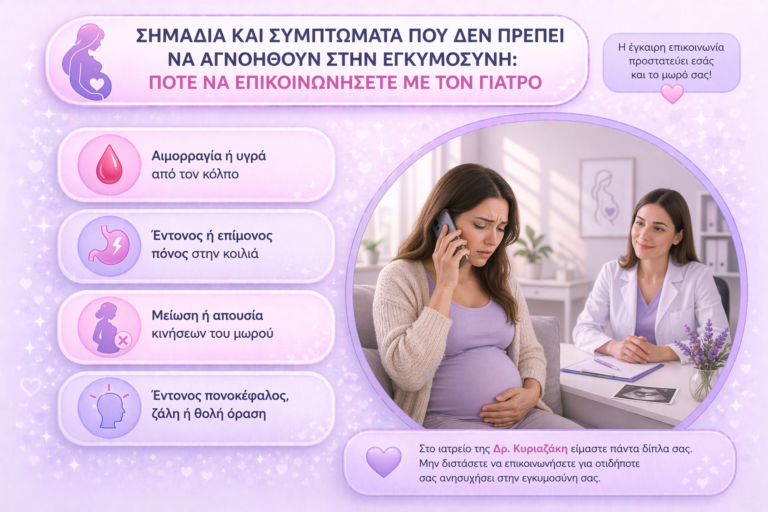
- Report immediately Report any new symptoms to the doctor.
- Keep a pregnancy diary with the exams and their results.
- Request support from your environment, especially during times of stress or fear.
WHAT CAN BE DETECTED THROUGH PRENATAL CARE
- Preeclampsia (high blood pressure and protein in the urine)
- Gestational diabetes
- Fetal growth retardation
- Cervical insufficiency or threat of premature birth
- Placental insufficiency
- Infections that may affect the fetus
Prompt treatment of these conditions can prevent serious complications.
EMOTIONAL SUPPORT AND MENTAL HEALTH
Comprehensive prenatal care is not only about the body, but also about the soul. Pregnancy can be accompanied by anxiety, phobias or emotional fluctuations. Regular visits to the gynecologist provide space for discussion, confidence building and relief from psychological pressure.
CONCLUSION
Pregnancy is not just a physical state – it is also a deeply emotional journey. Constant monitoring, proper information, and honest communication with the gynecologist create the conditions for a calm and safe motherhood experience.













 English (UK)
  Ελληνικά