
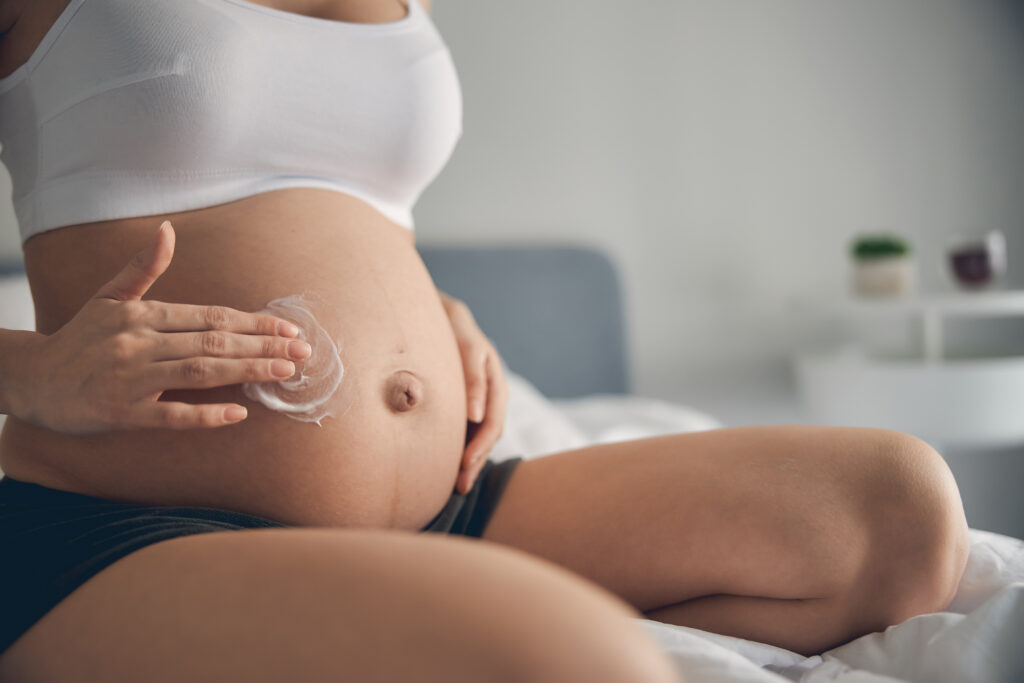
During pregnancy, the body goes through many changes. While many of these changes are internal, some are more widespread physically, including the skin conditions that can arise. There are many common skin conditions that can occur during pregnancy, and most of them disappear after delivery. Most common skin conditions can be divided into three categories: hormone-related, pre-existing, and pregnancy-specific.
Skin conditions related to hormones
Many skin conditions that women experience during pregnancy are due to hormonal changes. Pregnant women experience sudden and dramatic increases in a number of hormones, including estrogen and progesterone. Some of the most common hormone-related skin conditions include hyperpigmentation, stretch marks, vascular changes, and changes in hair and nails.
Hyperpigmentation
Dark spots that appear on the skin are known as hyperpigmentation. Hyperpigmentation is caused by an increase in natural melanin. Usually, hyperpigmentation goes away on its own after childbirth, but in some cases, it can take several years for it to completely disappear. Melasma, or the “mask of pregnancy,” is an example of hyperpigmentation that appears as brown spots on different facial features. Limiting sun exposure during pregnancy can help reduce the symptoms of melasma.
Stretch marks
Stretch marks are one of the most common skin conditions associated with pregnancy. Stretch marks affect nearly 8 out of 10 pregnant women. The first sign of stretch marks is itching as the skin begins to thin. Stretch marks are not harmful and have no medical problems associated with them. The most common areas for stretch marks include the abdominal area, upper thighs, and breasts. While stretch marks affect almost every pregnant woman, the timing and severity of stretch marks can vary from person to person. After childbirth, stretch marks tend to turn silver or white, making them less noticeable.
Vascular Changes
Changes in the body's estrogen levels can contribute to vascular changes in pregnant women. Some of the vascular changes associated with pregnancy include increased blood volume, telangiectasias (or spider veins), and more visible discoloration. Most of these conditions resolve after delivery.
Changes in hair and nails
Hair and nail changes are very common during pregnancy. Some women experience either an increase or decrease in hair growth and production. Many women experience excessive hair growth on various parts of their body. Although it can be embarrassing, there is no harm associated with extra hair on the stomach, arms, face, or any other part of the body. Nails also tend to grow faster during pregnancy. Pregnant women may also experience brittle nails, pitting, or—more rarely—separation of the nail from the skin. Many of these conditions resolve after delivery, but good nail care is always recommended during pregnancy to reduce the severity of these problems.
Pre-existing Skin Conditions
Pre-existing skin conditions such as acne, psoriasis and atopic dermatitis can take an unpredictable course during pregnancy. Acne can often worsen during the first and second trimesters. This is due to an increase in hormones called androgens. Androgens help the skin to grow and produce more sebum, which can clog pores, leading to flare-ups. Women who experience flare-ups during their menstrual cycle are more likely to experience acne during pregnancy. Psoriasis, on the other hand, is more likely to improve rather than worsen during pregnancy. Due to the increase in progesterone, which reduces the overactive immune response that causes psoriasis symptoms, up to 60% of women see an improvement in their psoriasis during pregnancy. Atopic dermatitis, also known as eczema, can improve or worsen during pregnancy. Eczema flare-ups are the result of a variety of environmental and internal factors, and pregnancy appears to be one of these triggers. Talking to your clinician about strategies to minimize disease activity early before conception may be beneficial.
Skin conditions associated with pregnancy
There are some inflammatory skin conditions, or types of dermatoses, that only occur in pregnant women. Some of the most common skin conditions associated with pregnancy are pruritic urticarial papules and plaques of pregnancy (PUPPP), pruritus of pregnancy (PP), intrahepatic cholestasis of pregnancy (ICP), and pruritic folliculitis of pregnancy (PF).
Pruritic papules and plaques of pregnancy (PUPPP)
Pruritic papules and plaques of pregnancy, or PUPPP, affect less than 1 percent of pregnant women (about 1 in 160 to 300), yet it is the most common skin condition associated with pregnancy. PUPPP initially appears as small, raised spots that look like pimples and can develop into larger patches of rash that look like blisters. PUPPP can cause intense itching, but it usually goes away on its own within a few days after delivery.
Pruritus of Pregnancy (PP)
Pruritus of pregnancy has been reported in all trimesters and occurs in approximately one in 300 pregnancies. Prolonged PP can last for weeks or sometimes months. There is no single cause directly associated with pruritus of pregnancy. Topical steroids or antihistamines may provide symptomatic relief in some cases.
Intrahepatic cholestasis of pregnancy (ICP)
Intrahepatic cholestasis of pregnancy (ICP) occurs most often in the third trimester. ICP is a condition that affects the release of bile from liver cells, leading to reduced liver function. This condition can cause intense itching first on the palms of the hands and soles of the feet, before spreading to other parts of the body. ICP may disappear after delivery, once bile flow returns to normal. This condition is associated with a higher risk of premature birth and intrauterine loss, so close monitoring is recommended once diagnosed.
Do you have additional questions about skin conditions during pregnancy?
If you have additional questions about common or unusual skin conditions during pregnancy, contact our practice today by calling (+30) 2310 220267 or by completing the relevant contact form.





 English (UK)
  Ελληνικά