
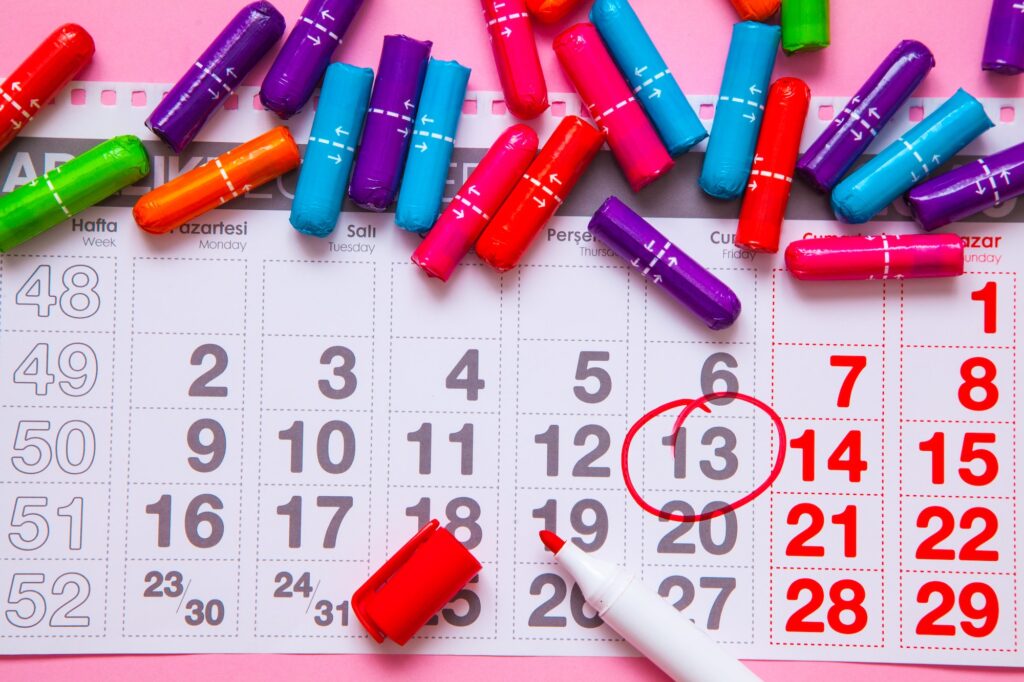
When it comes to women's health, there is no one-size-fits-all solution. Every woman is different and therefore every woman's cycle is different. However, cycles generally follow a pattern. On average, a woman's menstrual cycle lasts about 28 days, and her actual menstruation, or period, lasts about 5-7 of those 28 days. To help you better understand your body, here's a guide to understanding your menstrual cycle and the changes it brings.
What does a regular menstrual cycle mean?
As mentioned above, the menstrual cycle is the time period that extends from the first day of your period to the day before your next period. This time frame is usually around 28 days, but can range from 21 to 35 days for adult women and 21 to 45 days for teenage girls. Not everything that happens during a cycle is usually known. The exceptions to this are the days before the cycle starts, when women experience pre-period symptoms such as headaches and cramps, and during ovulation, which can sometimes lead to mild lower abdominal cramps and a little spotting.
Day 1-7
The uterus begins to shed endometrial tissue, blood, and other fluids that pass through the cervix and vagina. For most women, the majority of blood loss occurs during days 1 to 3. The average period lasts 3 to 5 days. Some women experience very light periods, while others have quite heavy ones. This all depends on the body. You may experience bloating, cramps, or discomfort in your pelvic area and/or lower back during these days. This is completely normal and can be treated using painkillers and anti-inflammatories. If the pain and discomfort are severe, you should seek an appointment with your gynecologist.
Day 7 – 11
This is often referred to as the “productive phase” and occurs when the follicles in the ovary mature and prepare to release eggs. During this phase, estrogen levels increase and the endometrium begins to thicken in preparation for the implantation of a fertilized egg. Around day 11, the egg is ready to be released. This is called “ovulation.”
- There is a very short window of time (about 24 hours) during which an egg can be fertilized, so if you want to conceive, we recommend that you familiarize yourself with your cycle so that you can time sexual intercourse to the days leading up to and during ovulation. Since sperm can live up to 5 days or more, you can have intercourse up until ovulation and have a greater chance of conception.
Day 11 – 14
In most cases, this is the ovulation window, although it can extend beyond day 14. The mature egg is released sometime during this time window, so this is the time to try to conceive. Estrogen levels peak and testosterone levels begin to rise, which can lead to increased libido. This is the body's way of promoting reproduction, as it knows this is when you are most fertile.
Day 15-17
Estrogen and testosterone levels begin to fall during this time, while progesterone levels begin to rise. The egg continues to travel down the fallopian tubes where fertilization occurs. If fertilized, hormone levels shift to facilitate implantation and the onset of pregnancy. If the egg is not fertilized, the cycle continues normally.
Day 18 – 20
Around here, estrogen levels start to rise again and progesterone levels remain high. The unfertilized egg will eventually be absorbed by the body as your cycle nears its end.
Day 21 – 28
The luteal phase begins the day the egg is released, so if your cycle is consistent according to the “average,” the egg release will be on day 14. However, it can be as late as day 20, depending on your body and your organism. During the last phase of your menstrual cycle, you will likely experience classic pre-period symptoms, such as bloating, acne, mood swings, and weight gain. Your progesterone levels will start to drop again, and your estrogen levels will decrease.
When should I see a doctor?
Talk to your gynecologist if you feel like your menstrual cycle is not following the average.
It is usually recommended to visit a gynecologist if:
- Your period has not started by age 15 or within three years of the first signs of breast development.
- You haven't had a period for three months or more.
- Your period has become very irregular after regular cycles.
- You bleed for more than seven days.
- Your bleeding seems much heavier than usual and lasts longer than your period (heavy bleeding is considered when you need to change a pad or tampon more often than every two hours)
- Your period comes more often than 21 days or exceeds 35 days.
- You bleed between your periods.
- You get sick or have a fever during your period.
- You feel severe pain or discomfort during your period.








 English (UK)
  Ελληνικά